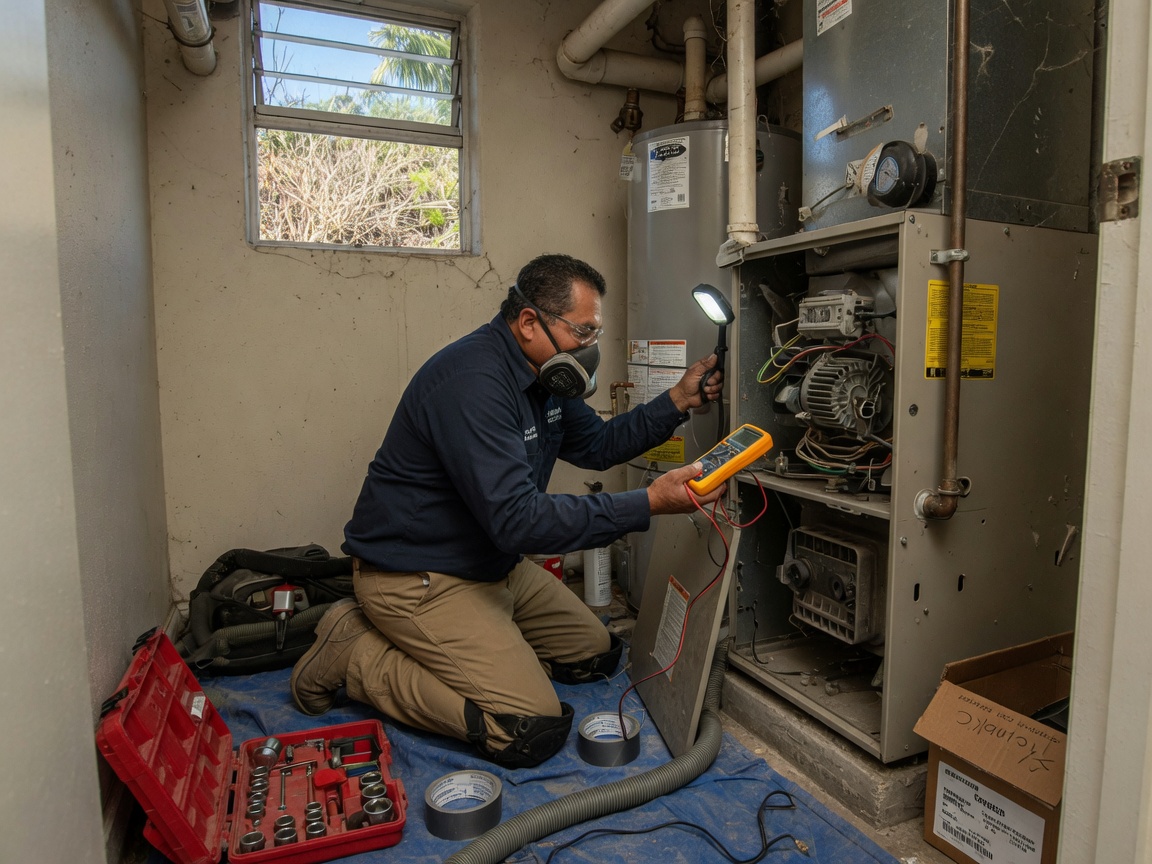
San Diego's Mediterranean climate keeps heating loads light most of the year, yet older homes in North Park and La Mesa often have original gas furnaces that sit idle for months. When a cold snap hits, neglected burners and heat exchangers can fail from corrosion or cracked components that only surface after long dormancy. Technicians familiar with these 1940s–1970s properties know to check for vent blockages caused by coastal fog and salt air before any seasonal startup.
Mission Valley and Downtown San Diego condominiums frequently use packaged or closet-installed units with limited access, requiring compact diagnostic tools and careful disassembly to avoid disturbing shared walls. Inland pockets near Chula Vista see slightly cooler nights that increase runtime, accelerating wear on blower motors and limit switches. Proper static-pressure testing prevents short-cycling that homeowners mistake for simple thermostat issues.
Pacific Beach and Coronado beach cottages sit on sandy, shifting soil that can tilt furnace platforms over time, stressing flue connections. Repair calls here routinely include leveling checks and seismic strapping verification required by local codes. These site-specific conditions turn what looks like a routine service into targeted work that addresses both the equipment and its installation environment.
La Jolla properties with multi-story additions often have mismatched duct runs that starve upstairs registers of heat. Technicians map actual airflow rather than relying on original blueprints, then adjust dampers or recommend targeted sealing. This approach resolves uneven temperatures without full system replacement in many cases.
Technician insight
In San Diego the thing that catches most people out with Furnace & Heating Repair is the long idle periods caused by our mild coastal climate. Systems in North Park and La Mesa sit unused for eight months, then fail from corrosion or seized bearings the first cold night. Homeowners often skip annual checks because the weather feels mild, yet those same conditions let salt air quietly degrade vents and exchangers.
North Park Bungalow Heat Failure
A 1960s bungalow in North Park lost heat during a rare cold snap. Inspection showed a cracked heat exchanger from years of idle corrosion. The exchanger was replaced, combustion verified, and the vent cleared of fog-related debris before the system was returned to service.
Furnace & Heating Repair Services We Offer
✓Gas Furnace Burner Cleaning
Removes soot and debris from burners in older North Park and La Mesa homes to restore even flame and prevent carbon monoxide risks during infrequent cold spells.
✓Heat Exchanger Inspection
Uses cameras and combustion analysis to detect cracks in aging units common to Mission Valley condos before they leak combustion gases into living spaces.
✓Blower Motor Replacement
Swaps failing motors in packaged systems serving Downtown San Diego high-rises where access constraints demand precise part matching.
✓Thermostat and Control Diagnostics
Troubleshoots smart and legacy controls that misread mild temperature swings in Pacific Beach homes, restoring accurate staging without unnecessary part swaps.
✓Flue and Vent Repair
Corrects corrosion and blockages from salt air in Coronado and La Jolla coastal properties to maintain safe exhaust and meet county venting standards.
Furnace & Heating Repair Cost in San Diego, CA
| Service | Typical Range | What Affects It |
|---|---|---|
| Diagnostic Visit | $125–$225 | Varies by neighborhood access and unit location |
| Gas Burner Cleaning | $200–$350 | Higher in older North Park homes with heavy soot |
| Blower Motor Replacement | $450–$850 | Depends on motor type and access in condos |
| Heat Exchanger Evaluation | $175–$300 | Includes camera inspection and report |
Ranges are typical for San Diego, CA and confirmed with an exact written quote before any work starts.
How it works
- 1
Initial Assessment
Arrive during posted hours, review system age and recent performance, then measure temperature rise and CO levels at the unit in the specific San Diego neighborhood.
- 2
Component Testing
Isolate the failed part—burner, motor, or exchanger—using manometers and electrical meters suited to the housing style and installation constraints.
- 3
Repair Execution
Replace or clean the component, verify proper combustion, and confirm airflow across the heat exchanger before restoring full operation.
- 4
Final Verification
Run the system through a complete cycle, document readings, and note any follow-up items such as duct sealing needed in the home's layout.
Pricing
Upfront quotes given after on-site assessment; ranges reflect typical San Diego County jobs.